Biology Glossary
Science
Hi, I'm Jacinthe Glenfield. I've been in the Science program at Montmorency since fall 2019. This glossary is for people who want to learn more about biology instruments that we use in our lab. The topic that I chose is biology because it's a fascinating subject. I think it will help people to expend their vocabulary, and also, It will help them to know how we use those instruments.
- Abiotic Factor
- noun
- An abiotic factor is a non-living part of an ecosystem that shapes its environment. In a terrestrial ecosystem, examples might include temperature, light, and water.
- fr: Facteur abiotique

- Allele
- noun
- One of two or more alternative forms of a gene that arise by mutation and are found at the same place on a chromosome.
- Example: If an allele is dominant then its characteristic will always appear in the phenotype.
- fr: Allèle

- Autosome
- noun
- Any chromosome that is not a sex chromosome.
- Example: Figure 4, an illustration of the features of trisomy 21 (Griffiths et al, 1999, Genetic Analysis) Downs syndrome (Trisomy 21) is an example of a trisomy condition affecting an autosome which can also be induced by translocation.
- fr: Autosome

- Biodiversity
- noun
- The variety of life in the world or in a particular habitat or ecosystem.
- Example: Also, biodiversity is being reduced at a much lesser extent than originally thought and this reduction can be slowed by halting deforestation.
- fr: Biodiversité

- Bioluminescence
- noun
- The biochemical emission of light by living organisms such as fireflies and deep-sea fishes.
- Example: More recent techniques use bioluminescence assays in the detection of S.aureus.
- fr: Bioluminescence

- Biome
- noun
- A community of plants and animals that have common characteristics for the environment they exist in.
- Example: Small range size is associated with forest biome, and the few species that inhabit Savannah or woodland habitats tend to be more widespread.
- fr: Biome

- Biosphere
- noun
- The regions of the surface, atmosphere, and hydrosphere of the earth (or analogous parts of other planets) occupied by living organisms.
- Example: The biologist E.O.Wilson also argues that humans have an innate affiliation with other living organisms, a capacity which he calls biophilia, and that our evolutionary heritage means that all living things are genetically and behaviorally bonded to the biosphere.
- fr: Biosphère

- Cell
- noun
- The smallest structural and functional unit of an organism, typically microscopic and consisting of cytoplasm and a nucleus enclosed in a membrane. Microscopic organisms typically consist of a single cell, which is either eukaryotic or prokaryotic.
- Example: At its simplest level, the theory suggests that the modern Eukaryotic cell evolved from symbiotic associations with prokaryotic ancestors.
- fr: Cellule

- Centrifuge
- noun
- A machine with a rapidly rotating container that applies centrifugal force to its contents, typically to separate fluids of different densities (e.g. cream from milk) or liquids from solids.
- Example: The raw milk was then pumped through the system and separated by the connecting centrifuge.
- fr: Centrifugeuse
- Chromosome
- noun
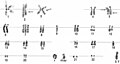
- Any of the microscopic rod-shaped bodies formed by the incorporation of the chromatin in a cell nucleus during mitosis and meiosis: they carry the genes that convey hereditary characteristics, and are constant for each species.
- Example: Normal eukaryotic cells contain two copies of any one chromosome.
- fr: Chromosome
- DNA
- noun
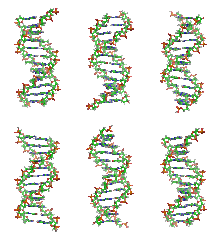
- Deoxyribonucleic acid, a self-replicating material which is present in nearly all living organisms as the main constituent of chromosomes. It is the carrier of genetic information.
- Example: Evidence for the theory is relatively strong, particularly the finding that mitochondria and chloroplasts have circular DNA similar in form to that of bacterial DNA, and that they contain prokaryotic type ribosomes.
- fr: ADN
- Ecological niche
- noun
- Ecological niches is a term for the position of a species within an ecosystem, describing both the range of conditions necessary for persistence of the species, and its ecological role in the ecosystem
- Example: Consequently, the species are of medium size, lightly built, slender and long limbed (Fig 3), all of which means they are perfectly adapted to moving quickly in their present ecological niche.
- fr: Niche écologique

- Genetic
- noun
- Relating to genes or heredity.
- Example: In the last ten years a number of genetic studies have been undertaken using mitochondrial DNA to try to determine the origin of modern H. sapiens and more recently whether we are related in any way to Neanderthals.
- fr: Génétique

- Genotype
- noun
- The genetic constitution or genetic makeup of a particular organism or group of organisms.
- Example: They therefore remove individuals with a similar genotype and not the more genetically diverse organisms.
- fr: Génotype

- Metabolism
- noun
- The chemical processes that occur within a living organism in order to maintain life.
- Example: There are many biological factors that contribute to weight regulation; homeostasis, certain brain structures, neurochemicals and metabolism have all been found to influence our weight.
- fr: Métabolisme

- Microscope
- noun
- An optical instrument used for viewing very small objects, such as mineral samples or animal or plant cells, typically magnified several hundred times.
- Example: They are large enough to be seen under a light microscope, but a detailed examination can only be carried out using an electron microscope.
- fr: Microscope

- Mutation
- noun
- The act or process of mutating; change; alteration. a change or alteration. a change in the chromosomes or genes of a cell. When this change occurs in the gametes the structure and development of the resultant offspring may be affected also inversion.
- Example: It does not cast the Darwin ideas aside, as this theory does explain the improvement of species through random genetic mutation and negative selection.
- fr: Mutation

- Organ
- noun
- A part of an organism that is typically self-contained and has a specific vital function, such as the heart or liver in humans.
- Example: The main aim of Radcliffe-Brown was to create a social Anthropology, which was generalizing and thus a Science, he was a strong advocate of the organic analogy, viewing society as a biological organism, whereby each organ has a function in making that organism survive
- fr: Organe

- Phenotype
- noun
- The observable characteristics or traits of an organism that are produced by the interaction of the genotype and the environment.
- Example: He determined a distinction between genotype and phenotype, the genotype having two alleles or genes, in most cases on being 'dominant' and expressed and the other being 'recessive' hidden.
- fr: Phénotype
